Feeding Game for Fine Motor Skills
Why We Recommend This Toy
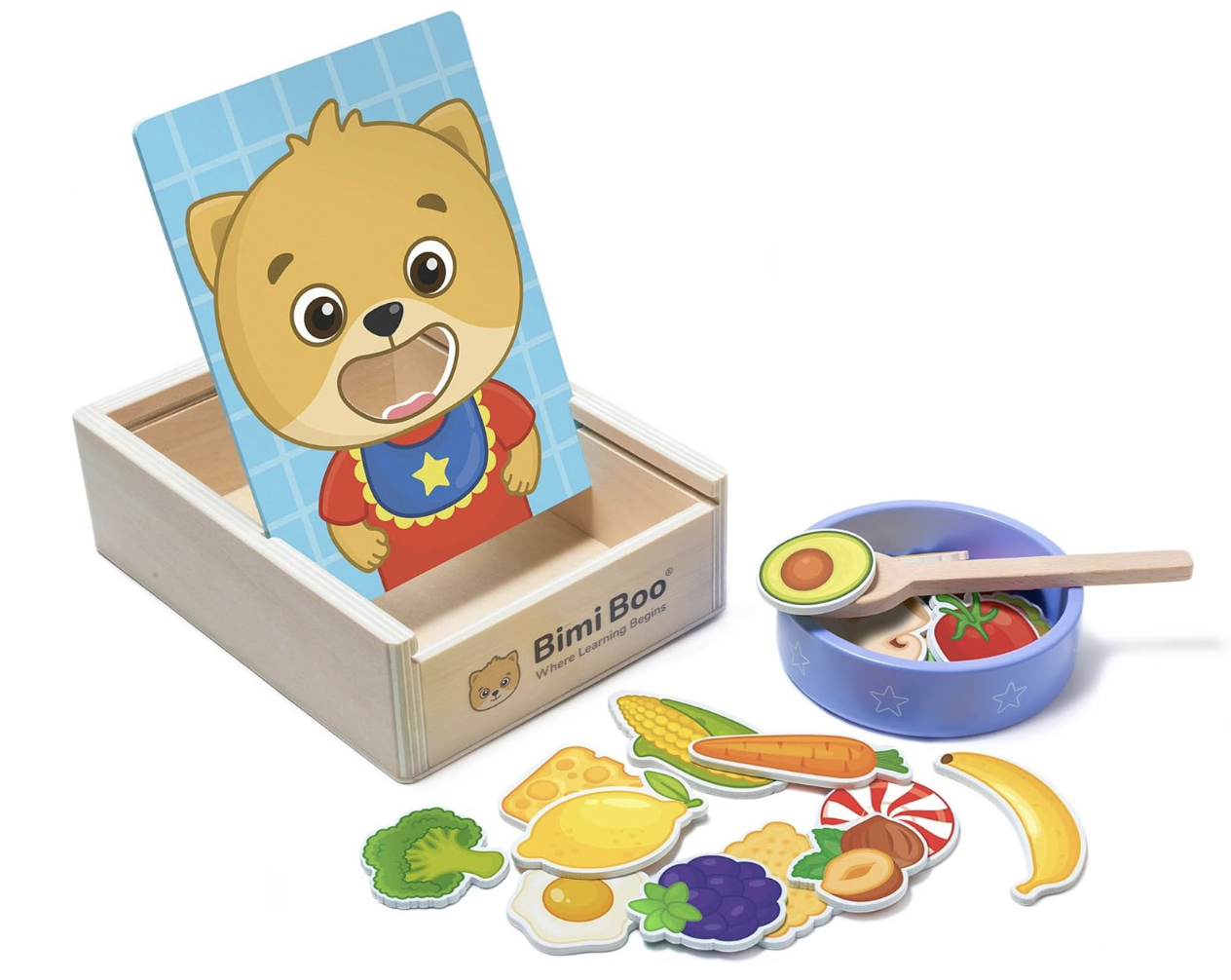
This feeding game is a wonderful toy for building fine motor skills, pretend play, and early language development. The child uses a spoon to pick up different foods and “feed” the animal, encouraging coordination, concentration, and problem-solving.
We especially like toys like this because they encourage purposeful play. Instead of simply pressing buttons, children actively practice scooping, transferring, and feeding while engaging in imaginative play. This type of activity supports both motor development and social learning.
Because it includes a variety of foods, it also creates natural opportunities to name foods, colors, and categories, making it a great tool for early language development.
What This Toy Is Useful For
This toy supports development across multiple areas:
Fine motor skills – scooping food with the spoon, hand-eye coordination, wrist rotation and control
Early language & speech development – naming foods and colors, expanding vocabulary, and practicing simple phases
Cognitive skills – problem-solving, cause-and-effect, sorting and recognizing different foods
Social skills – turn-taking, shared play, joint attention
Attention & regulation – completing feeding task, anticipation, and clean-up routines
How to Use This Toy by Age
-
At this stage, the focus is exploration and imitation.
Activities:
Let your child explore the different food pieces
Name each food as they hold it
“That’s a banana!”Help them scoop food with the spoon
Model feeding the animal while narrating
“The puppy is hungry!”
Tip: Start with just a few pieces of food so it doesn’t feel overwhelming.
-
Children can start participating more actively in the feeding activity.
Activities:
Encourage your child to scoop food with the spoon independently
Practice simple phrases like
“Feed puppy!”
“More food!”Take turns feeding the animal
Identify foods and colors together
Tip: Pause and wait to see if your child requests another turn or reaches for more food.
-
At this stage, pretend play becomes more advanced.
Activities:
Pretend to cook meals before feeding the animal
Sort foods by type (fruit, vegetables, etc.)
Feed dolls or stuffed animals
Practice turn-taking with siblings or friends
Create simple pretend scenarios like
“The puppy wants breakfast!”
Tip: Ask open-ended questions like
“What should the puppy eat next?”