Mr. Potato Head
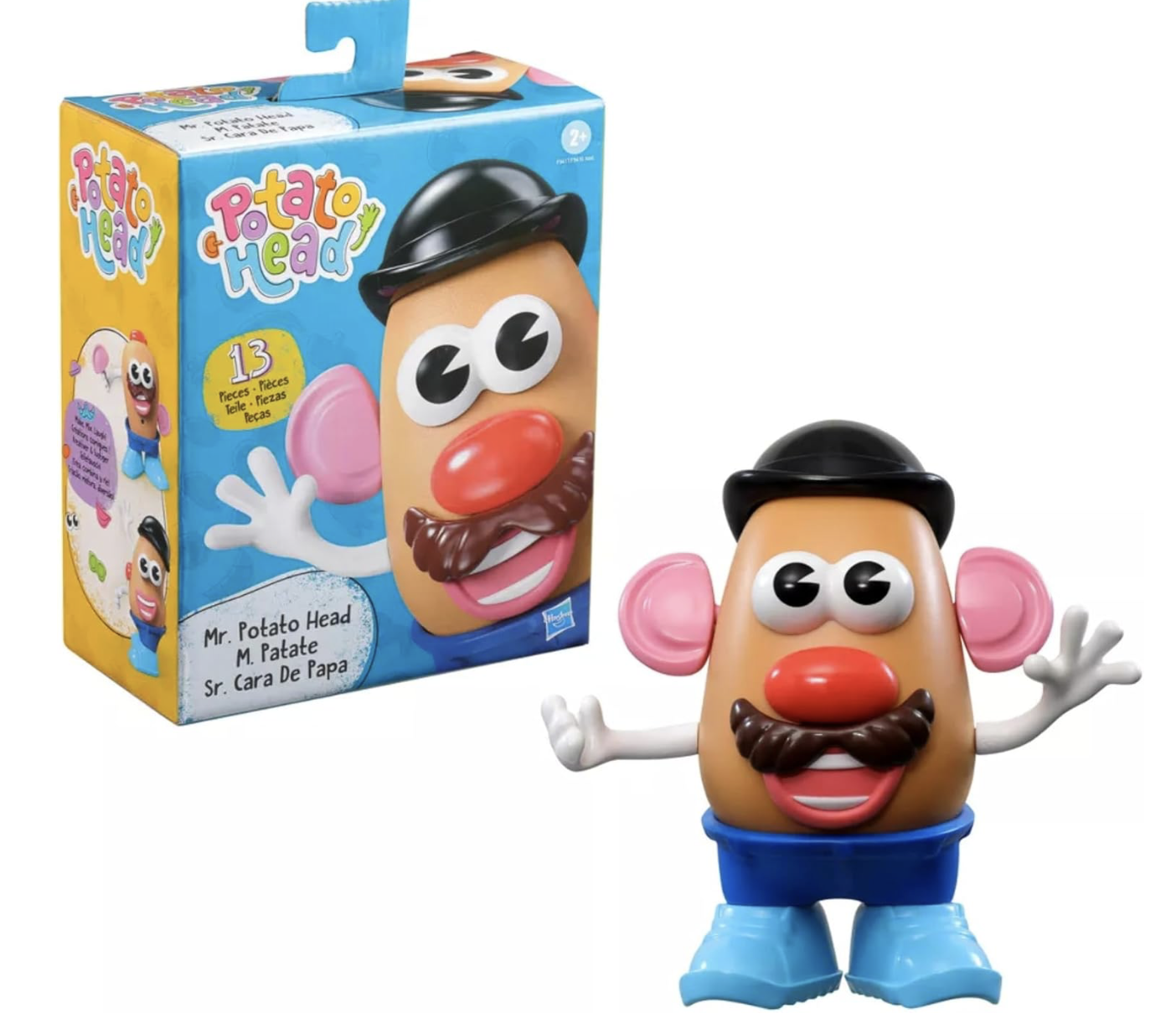
Why We Recommend This Toy
Mr. Potato Head is an excellent open-ended toy for supporting imagination, body awareness, language development, fine motor skills, and flexible thinking. Unlike toys with one correct answer, children can build, remove, rearrange, and create endlessly, making it a great toy for repeated use across developmental stages.
What This Toy Is Useful For
This toy supports development across multiple areas:
Fine motor skills – support grasp strength, hand separation, bilateral coordination, finger dexterity, and controlled placement/removal of pieces
Early language & speech development – choices, labeling, imitation, creates opportunities to label body parts, describe emotions, expand vocabulary, and practice following directions
Cognitive skills – cause-and-effect, encourage trying different combinations, adapting when pieces do not fit, and understanding that there are multiple solutions
Social skills – turn-taking, shared play, joint attention, support discussing emotions, expressions, perspective taking, and pretend play
How to Use This Toy by Age
-
At this stage, children are beginning pretend play and learning how objects fit together. Focus on exploration rather than accuracy.
Ideas to try:
Start with only 2–3 pieces (eyes, nose, hat) instead of the full set.
Let your child remove pieces and hand them back to you.
Model placing one feature at a time and narrate (“Eyes go up here!”).
Name body parts as you play.
Play “Where does it go?” without correcting mistakes immediately.
Make silly faces together and imitate expressions.
Practice taking pieces in and out repeatedly.
Match features to your child’s own body (“Where are your ears?”).
Children this age are developing early pretend play, body awareness, simple problem-solving, and the hand control needed for inserting and removing pieces.
-
Children become more intentional and begin combining language, planning, and imagination.
Ideas to try:
Encourage your child to build independently.
Give simple directions (“Put the eyes above the nose”).
Practice identifying emotions (“Can you make a happy face?”).
Create silly combinations and talk about what changed.
Play turn-taking games where each person adds one piece.
Introduce concepts like top/bottom and left/right.
Tell short stories about the character you built.
Ask questions (“What should we add next?”).
Children this age are strengthening symbolic play, receptive language, visual-spatial skills, and sequencing abilities.