Pretend Play Cutting Food Set
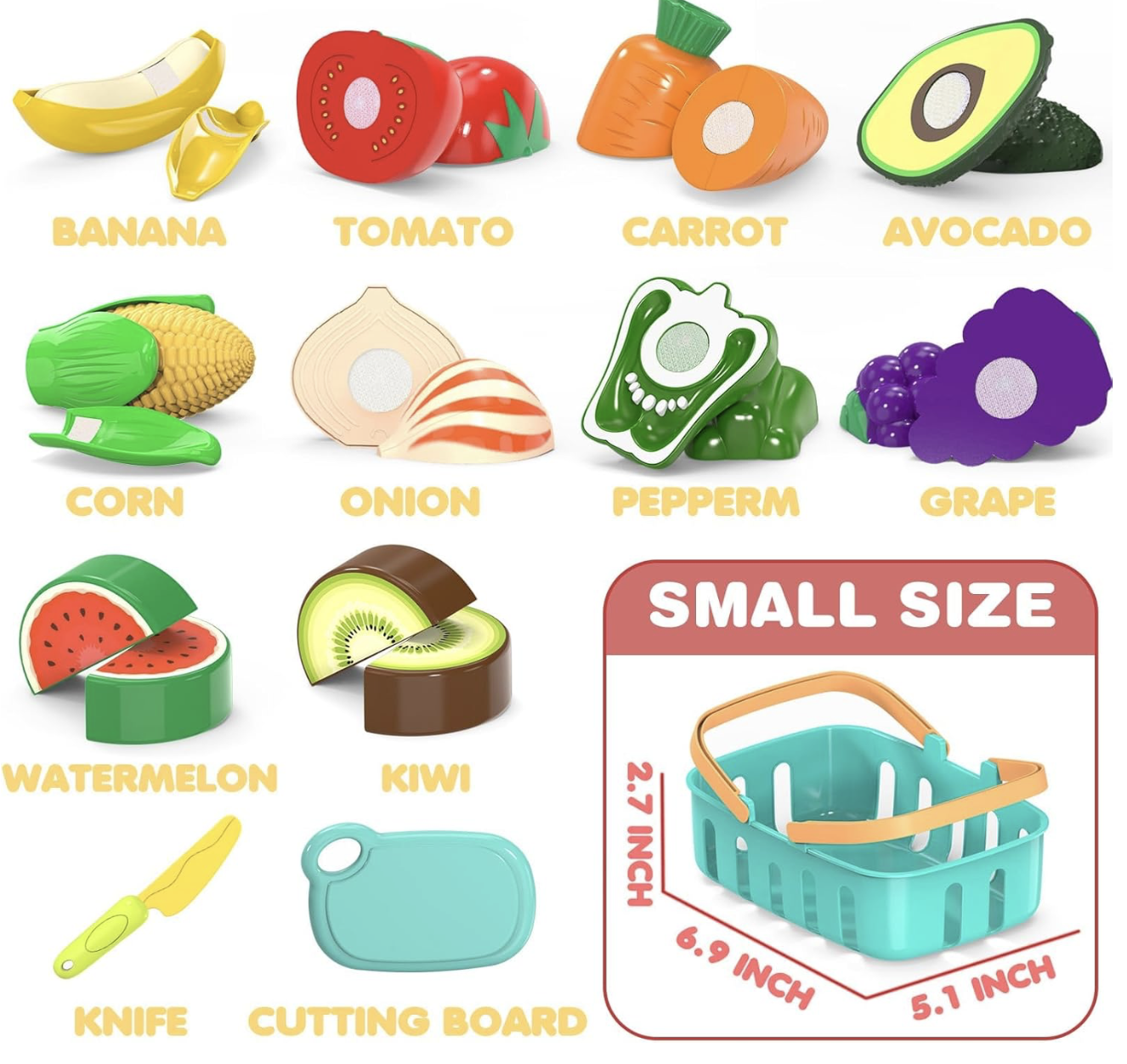
Why We Recommend This Toy
Pretend play is one of the most powerful ways young children learn — and this cutting food set combines imagination, fine motor practice, and language development all in one activity.
Children naturally love copying everyday routines like cooking, shopping, and preparing food. This toy gives them a safe way to practice those real-life experiences while strengthening hand coordination and learning new words.
We especially love that the cutting motion provides clear cause-and-effect feedback (press → slice → separate), which keeps children engaged and motivated. It also creates natural opportunities for conversation, turn-taking, and pretend storytelling.
This is a highly engaging, hands-on toy that supports both skill-building and imaginative play.
What This Toy Is Useful For
This activity supports development across multiple areas:
Fine motor skills – grasping, stabilizing, cutting motions, hand strength
Bilateral coordination – using two hands together (hold + cut)
Language development – food names, action words, requesting, labeling
Pretend play & imagination – cooking, serving, shopping routines
Cognitive skills – categorizing foods, matching pieces, sequencing actions
Social skills – turn-taking, role play, shared interaction
Sensory learning – visual and tactile feedback from separating pieces
Because it combines movement, pretend play, and communication, this toy is especially helpful for building engagement and interactive play skills.
How to Use This Toy by Age
-
At this stage, the focus is exploration and sensory experience.
Let your child hold, shake, and mouth the food pieces (if safe and supervised)
Name foods as they explore: “Banana!”, “Apple!”, “Carrot!”
Show how pieces come apart and go back together
Model simple actions slowly: tap, bang, separate
Encourage reaching and grasping
Tip: The goal is exposure to objects, textures, and early vocabulary.
-
At this stage, the focus is action imitation and simple pretend play.
Model cutting and help guide their hands to try
Use simple phrases: “Cut!”, “Open!”, “All done!”
Practice putting foods in the basket or on the board
Introduce basic pretend play: feed a doll, serve a parent
Encourage identifying foods when given a choice
Tip: Repeat the same play routines — repetition builds learning.
-
At this stage, the focus is independent pretend play and language expansion.
Encourage full pretend routines (cook → serve → eat → clean up)
Ask simple questions: “What are you cooking?”
Expand language:
Child: “Apple”
Adult: “You cut the red apple!”
Practice sorting foods (fruit vs vegetables, colors, sizes)
Take turns being the “chef” and the “customer”
Tip: Follow your child’s imagination — creative play builds communication.