Walking Harness
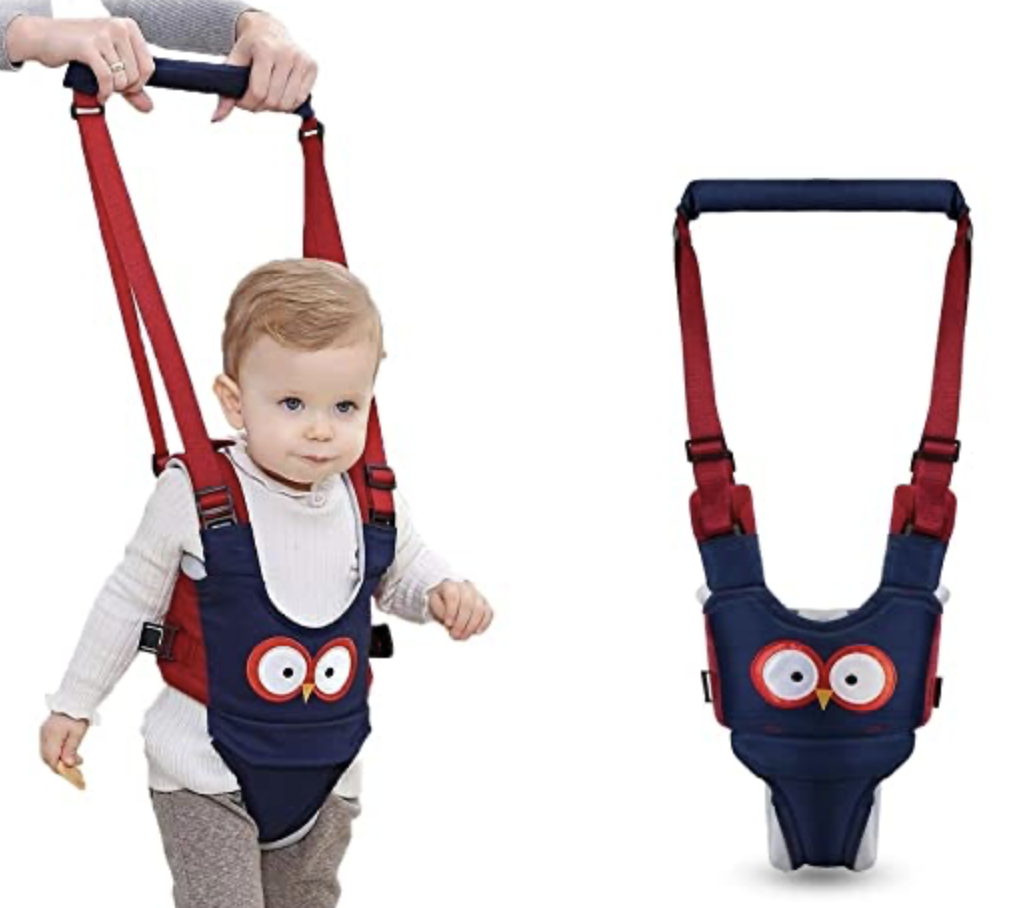
Why We Recommend This Toy
Learning to walk is exciting — but it can also be physically challenging and frustrating for both children and caregivers. A walking harness provides safe physical support while allowing children to practice movement independently.
We like this tool because it helps children experience upright movement, weight shifting, and stepping — without constant hand-holding or unsafe pulling on arms. It also reduces caregiver strain by supporting posture while assisting balance.
Most importantly, it supports confidence and motivation during one of the biggest developmental milestones: independent walking.
What This Toy Is Useful For
This activity supports development across multiple areas:
Gross motor development – stepping, weight shifting, balance, coordination
Core strength & postural control – upright positioning and trunk stability
Motor planning – learning how to move feet forward and control body movement
Confidence & independence – practicing movement with support but not full assistance
Caregiver ergonomics – safer physical support without pulling arms or bending over
Exploration & mobility – moving through space to explore the environment
This tool can be especially helpful for children who need extra support with balance, muscle strength, or confidence when learning to walk.
How to Use This Toy by Age
-
At this stage, the focus is upright experience and supported stepping.
Let your child feel what it’s like to stand upright with support
Gently help them shift weight from one foot to the other
Encourage bouncing, stepping in place, or small forward movements
Keep sessions short and playful
Use encouraging language: “Stand up!”, “Step!”, “You’re moving!”
Tip: The goal is exposure and comfort — not independent walking yet.
-
At this stage, the focus is guided forward movement and balance practice.
Allow your child to initiate steps while you provide light support
Practice walking short distances toward a favorite toy or person
Encourage stopping and starting to build control
Let them explore different surfaces (carpet, grass, smooth floor)
Celebrate effort — not just success
Tip: Reduce how much you assist as their balance improves.
-
At this stage, the focus is confidence, endurance, and independence.
Use the harness for longer walking practice outdoors or in open spaces
Encourage navigating around objects or changing directions
Practice walking uphill, downhill, or over small obstacles
Slowly transition away from using the harness as stability improves
Pair walking with functional goals (carry toy, walk to door, explore playground)
Tip: Let the harness be a safety backup — not constant lifting.